

OpenAI Opens ChatGPT’s Doors to Businesses and Their AI Agents
OpenAI’s new Business Hub lets companies claim their presence in ChatGPT, update product information and launch customer-facing agents. AI discovery is becoming a storefront of its own.

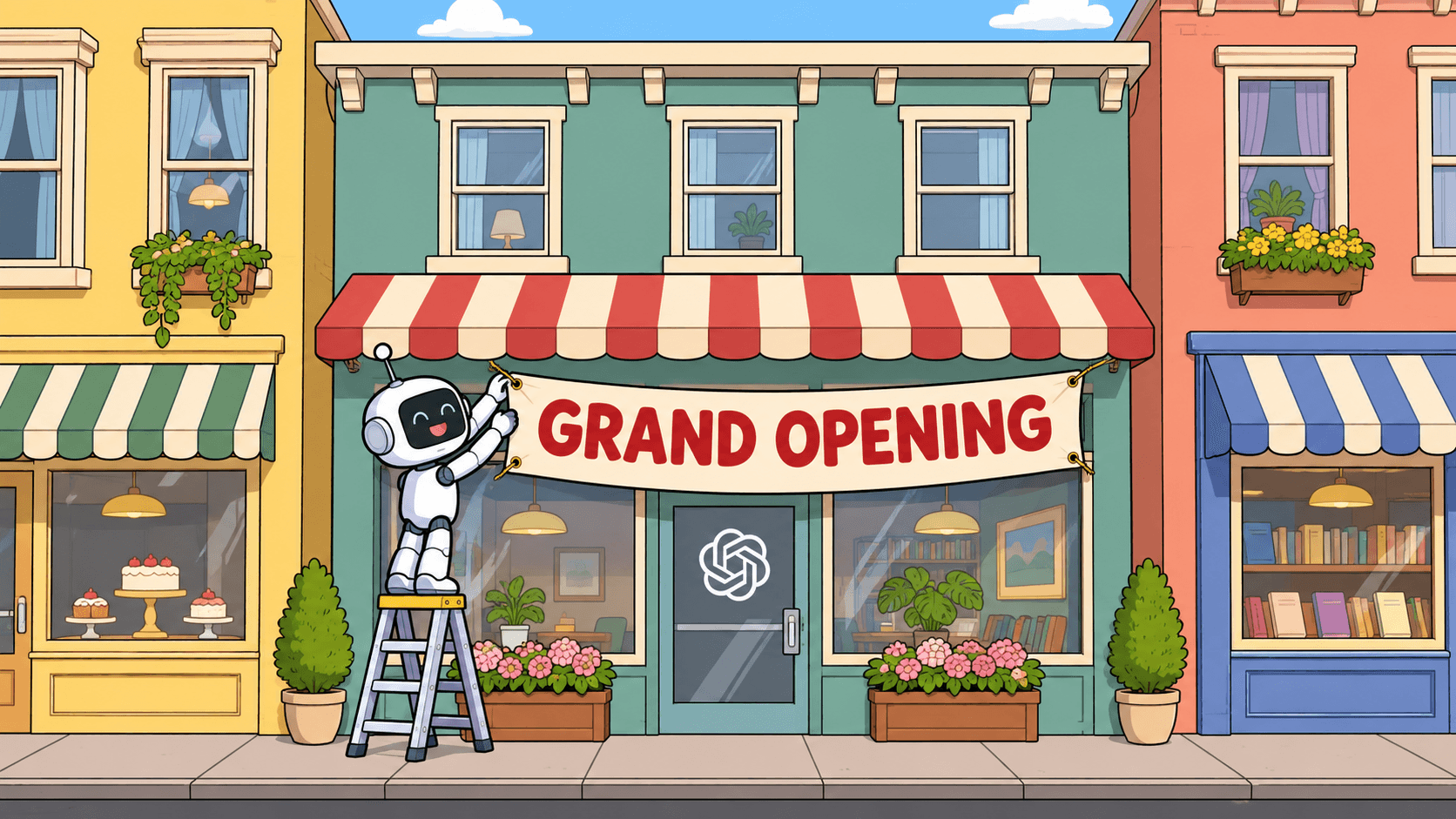
A new storefront inside ChatGPT
OpenAI is giving businesses a more direct role in how they appear inside ChatGPT. Announced November 10, Businesses in ChatGPT is launching in beta with tools for managing company information, understanding customer engagement and, for eligible businesses, answering questions through a dedicated AI agent.
The company says ChatGPT now reaches 1.2 billion weekly users. That makes this more than another business-directory announcement. OpenAI is building a place where someone can discover a company, compare its offerings and ask follow-up questions without immediately leaving the conversation.
Business Hub is the starting point. Companies can claim their organization and supply current information, including product feeds with pricing and availability. OpenAI says Shopify merchants can connect through Business Hub or Shopify’s administration tools to simplify verification.
Claiming a profile is only the first step
According to OpenAI’s setup guidance, an owner or authorized representative must verify their connection to the business. Available methods can include a business email, phone, website domain or Shopify. Approval of the claim is followed by identity verification through Persona before publishing information changes, viewing insights or creating an eligible agent.
A company does not need an advertising account or a ChatGPT Enterprise contract simply to claim an eligible business. However, eligibility depends on location, business type and available verification methods. A verified profile also does not automatically qualify a business to launch an agent.
For operators, the practical work starts with the basics: accurate descriptions, current product information and clear policies. An AI system cannot reliably explain an offering if the business supplies outdated prices or contradictory return terms. Keeping those inputs current becomes part of managing the customer experience.
Business agents enter the conversation
Business Agents initially serve eligible U.S. ecommerce and online service businesses. A customer can choose to open a separate conversation with an available agent from a company’s ChatGPT profile.
The agent can help explain products and policies using information supplied by the business. OpenAI’s setup process includes previewing answers before publication, giving companies a chance to correct weak responses before customers see them.
OpenAI’s policy requires agents to identify themselves as AI representing a business. They cannot pose as independent advisers, human employees or an OpenAI endorsement. That distinction matters when someone moves from general research into a conversation designed around a seller’s offerings.
Businesses can also promote an agent through advertising. OpenAI says sponsored placements are labeled separately from its responses. The commercial opportunity is clear, but the value will depend on whether these conversations answer useful questions and help people make decisions.
Visibility without access to private chats
Business Hub provides aggregated engagement measures, including mentions, website clicks and discovery topics. OpenAI says businesses do not receive individual user conversations or chats with their agents.
Reporting also depends on activity thresholds. OpenAI’s help guidance cautions that an empty metric does not necessarily mean nobody engaged; the data may be incomplete, still processing or below the reporting threshold.
That limits how precisely a company can interpret the dashboard. A mention is not a sale, and a discovery theme is not proof that a customer intends to buy. Businesses will still need to connect any observed interest with outcomes they can actually measure.
Why this changes the discovery fight
The broader implication is that the path from research to purchase is becoming more conversational. A business may increasingly need to explain itself to both a person and the AI interface helping that person evaluate choices.
This does not make a company’s website irrelevant. It makes the quality and consistency of the information behind that website more valuable. Product details, policies and differentiation need to remain understandable when presented outside the familiar storefront.
For smaller businesses, the opportunity is another way to reach interested customers. For larger platforms, it raises a competitive question: who controls the moment when someone moves from asking a question to choosing a provider? OpenAI is now building more of that journey inside ChatGPT.