

Helium Turns Casino Wi-Fi Into Working Carrier Infrastructure
Hialeah Park Casino’s existing Wi-Fi carried more than 127,000 carrier sessions in three weeks, offering a concrete look at Helium’s real-world connectivity model.

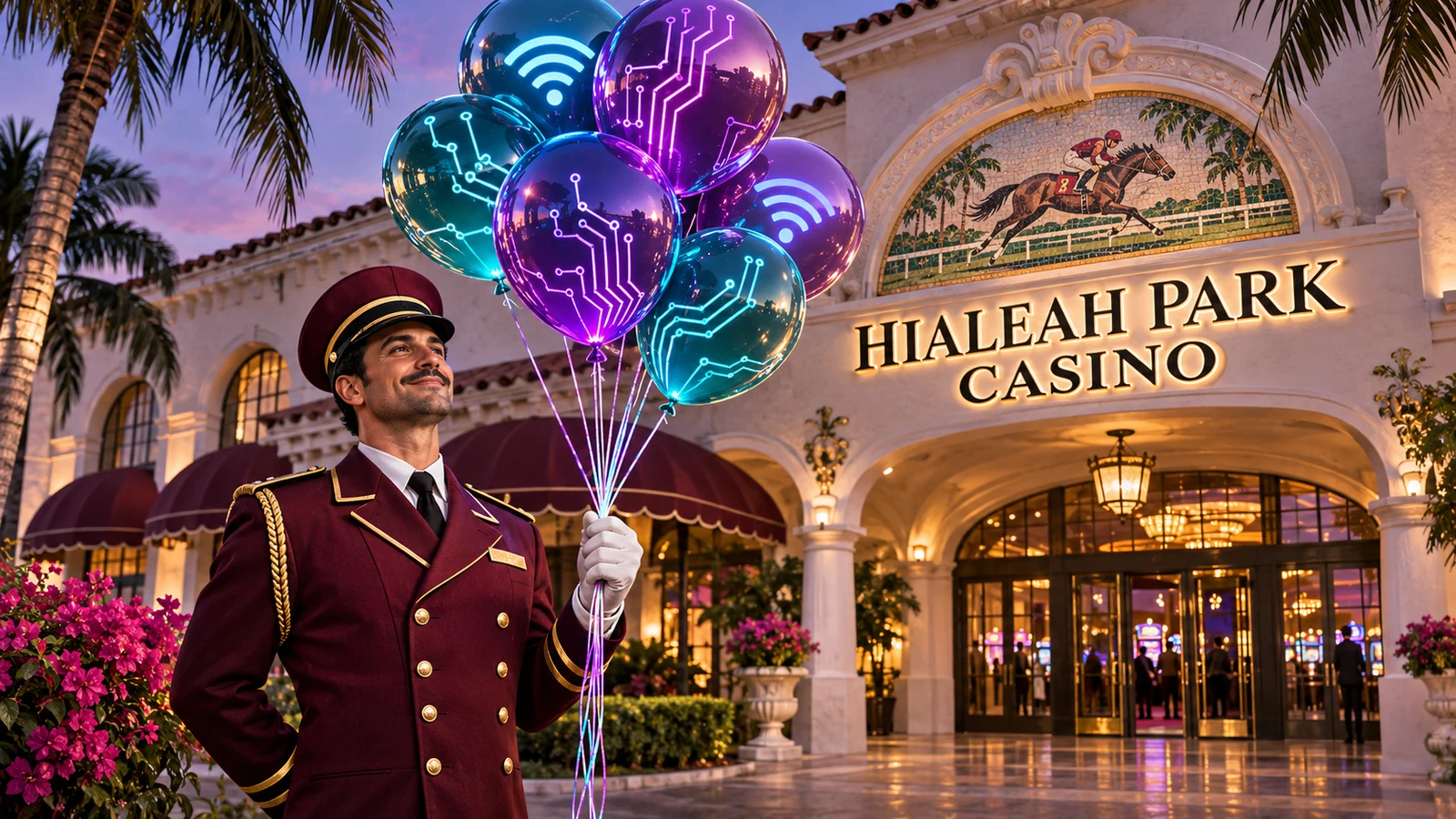
A New Look at Real-World Usage
Helium has published fresh operating results from Hialeah Park Casino, providing a concrete example of how its network can put existing venue Wi-Fi to work. The November 3 update describes carrier traffic flowing through infrastructure the South Florida property already owned.
According to Helium, service began October 1, 2026. The first three weeks generated roughly 846 GB across more than 127,000 sessions. Daily subscribers reached 1,179 on October 18, with typical weekdays serving between 400 and 700.
The timing matters: this is a newly released performance report on an October deployment. Those figures give the story more substance than an announcement that a venue simply plans to participate.
How the Casino Connection Works
Helium says the property uses Helium Plus to move eligible subscribers of an unnamed tier-1 carrier onto its Wi-Fi. Passpoint handles the connection automatically using device credentials, without requiring guests to download an app or sign in.
The company says the casino reused its enterprise Wi-Fi without new construction or hardware. The disclosed carrier is not named, and the report does not provide the casino’s revenue or profit.
For a guest, a useful connectivity service should require very little attention. People arrive to enjoy the venue. If connecting becomes another task, that creates a hurdle before the network can provide value. An automatic connection offers a straightforward way around that problem.
Why Existing Infrastructure Matters
My read is that the most interesting part of this story is the starting point. A business that has already invested in reliable connectivity has a different expansion decision from a business considering an entirely new installation.
Reusing equipment could make participation easier to justify, provided the additional traffic does not undermine service for the venue’s own operations. That is the commercial question I would want answered before treating this as a model that every large property should follow.
Imagine a venue evaluating two possible upgrades. One requires a separate construction project. The other asks whether existing capacity can support an additional service. Even before comparing prices, the second route could involve fewer practical obstacles. That is an analytical illustration, not a cost comparison supplied by the casino.
Successful reuse also depends on the quality of what is already installed. A compelling example at one property does not mean every venue has sufficient coverage, backhaul, or operational support to reproduce it.
Usage Is a Starting Point for the Business Case
The reported subscriber counts, sessions, and data volume describe different things. They should not be collapsed into one customer number. More than 127,000 sessions does not mean more than 127,000 separate people visited or became paying subscribers.
The next questions are financial. How much does the property earn? What operating costs are associated with the traffic? Does usage remain consistent beyond the initial reporting period? Those answers would help establish whether the deployment produces a repeatable business outcome.
For crypto investors, I would also keep venue adoption and token performance as separate steps in the analysis. A useful service can strengthen an ecosystem’s commercial story, but this particular report does not establish a valuation target or quantify a direct benefit to token holders.
What I Would Watch Next
I would look for follow-up data from Hialeah Park and comparable results from other properties. A wider set of deployments would make it easier to assess whether the casino represents a typical opportunity or an especially favorable location.
For now, the report offers something worth tracking: measured use of existing infrastructure by carrier subscribers. The strongest version of the story is the practical one. A venue has connectivity, visitors need connectivity, and Helium is reporting that its system is connecting the two.